Saturday, August 28, 2010

Reflections of first day of workshop after summer camp

We started with choosing the emotion that we had gone through from the time we got up till we reached school. We chose colors for our emotion and we spoke about what would be the opposite of the emotion we went through and what color of the opposite emotion would be. Each one of us had our own meanings associated with color. Selva felt love for embroidery so the chose white, love as pure as white. Chandrakala felt joy for meeting nandini, sharath, selva who she doesn’t meet in usual classes. She chose pink, her favorite color for a joyous feeling. Sharath felt happy to know embroidery was starting again, he chose yellow, the yellow of flowers blooming.

Then we made rainbow of the colors that we chose for our emotions. It was arranged in family of colors. We spoke about red, green and blue being the parents and they create their kids (orange, violet etc) by giving ach other their color and its qualities.

We listened to the story where colors quarrel about being superior from each other, each color describing its qualities as better from the other and symbolizing something. In the end rain brings the colors together,unite them and they stretch together to form a rainbow,”a sign of hope for tomorrow”.

We discussed that no one is actually less than the other. Each of us has special qualities like colors.
Then we started with visualizing the emotions we had gone through in the morning. We used lines and colors to depict emotions. Children struggled with what kind of lines to use, how important would color be in a visual. But they started drawing something that they don’t generally draw, something they are not used to drawing before. It was not easy to get the feel of the emotion through lines and colors. There was struggle amongst kids to break away from the usual drawings they draw, and struggle for me how to get them to do that, how to direct them towards their visual. Some communication issues arising-some felt discouraged. Some were in a state of confusion which is not a bad thing, but it was very uncomfortable for them.
It took a long long time to help them with visuals; we are still not done with it, also because I was working with them individually. Coming of arzu helped, she said I can tell them give each other feedback that would make better time management and work faster and it would help children. Children did not start embroidery today, though their heart lies in doing embroidery more.

One thing is that the children need to be clear in their heads what is it they want to show and I need to help them bring it out by asking them questions and giving them some sort of directions.

Conversation with Arzu-
I realized that I need to encourage children more than just telling them “try more”, tell them it’s good. (Arzu)- There are four tools to work with in facilitation- see (VALUE) in something-point out in the visual what is good. Ask them questions-what are you trying to express? Is it coming across? (CLARIFICATION). Tell them what is it you think about what they have drawn(CONCERN)- ‘it is similar to your previous drawing’, give them suggestions what they can do to move further (VALIDATE)
I think it would be okay to do just visuals on Saturday and not push for embroidery on Saturday (Arzu)- what do they feel do more? They showed me their embroideries, it is embroidery that they want to do. What ever they come up with, they will feel happy about it. Let them do it, let them make mistakes; don’t protect them to make mistakes. It’s a game, let them play it.
Get them to give feedback to each other in groups of three.

I am not trying to protect them from making mistakes, I am struggling with knowing when I should tell them yes you can start embroidery, considering the amount of time I have with children. I want them to know what they want to draw and does their visual say that? I know the joy they get by doing embroidery is much more than the tedious task of doing visuals. My struggle is till what level to push their visualization.

Tuesday, August 17, 2010

Next step

I looked back at my proposal. I decided I won't stick specifically to the dreams and identity aspect.After summer camp, I spotted some of the needs of kids which can be fulfilled like need for self worth, need for encouragement, need to express, need to be listened. After extracting some insights from summer camp, I am trying to get them to say something about themselves that they have never thought about before. what is it that they would want to tell others about themselves? They are unaware about it themselves but through the process of activities that I have planned, they will discover things about themselves.

I have planned activities in such a way that they fulfill the three skills: conceptualization, visualization and technical skills. The activities will connect to the final garment.

They have been given uniforms for each day, I wonder if that makes their identity or is it a loss of identity? (This point came while I was talking to Meera). I am not getting too deep into identity aspect either. What each child discovers about himself/herself will form their identity. what they discover about themselves will make them "them".

Focus points


I have planned further activities keeping in mind all the three skills. the activities have been planned in such a way that they will connect to the final garments in the end in terms of visuals, concepts and techniques.

Tuesday, July 27, 2010


I want children to have their stories with them that they want to say about themselves. What is it that they want to say about themselves? What is it that makes them “them”? Till now I was looking for big things I think, expecting too much. Simplest things would be the most powerful things-ordinary is extraordinary.

We miss a person-which is ordinary. The way Shashikala missed her Akka in school was ordinary-her thoughts/feelings inside her made her do ordinary. We miss ordinary the most. Ordinary makes us “us”.

The small flame of a lamp gives Vijaykumar the idea of oneness. The little flame became extraordinary after Vijaykumar’s thought.

Kanniyamma’s one straight line-“I want to be free like air” says it all.
I think there is so much in these simple straight words, which can be carried forward for their stories. I think it would be good to take their thoughts form Summer Camp forward for their identities and stories.

Accepting their thoughts, would be the way to proceed ahead.

Kids


Kids listening, watching, thinking, doing.
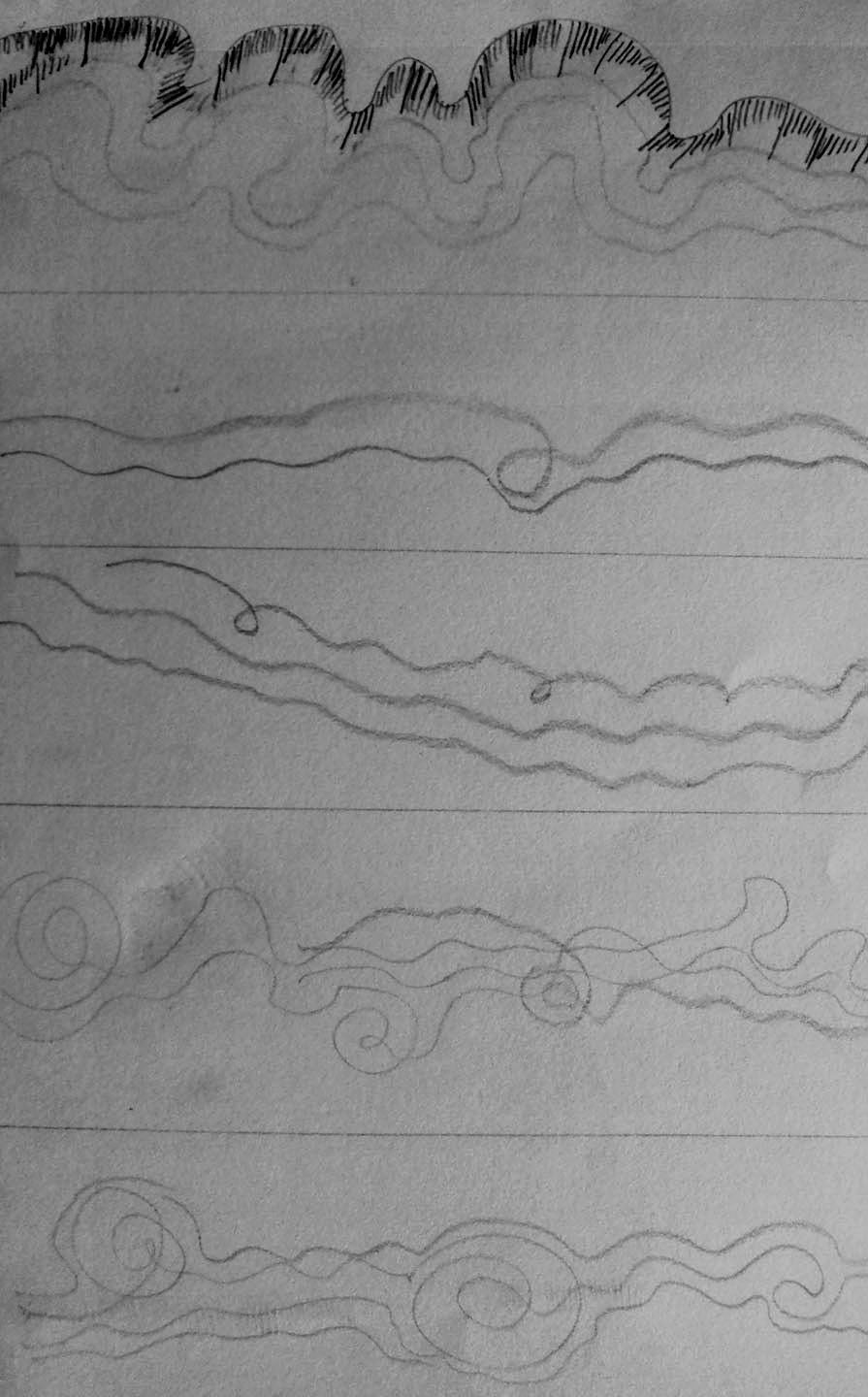
I just sat and drew after one class, I was so frustrated from inside about how the workshop was being facilitated. So I just sat and drew and drew.

Monday, July 26, 2010

Panel meeting

Krupa
-Reflect more on Summer Camp-see what you have got, because you are saying much more than what you have shown in the blog
-Look at the challenges that you faced or foresee.
-What themes you came about?
-Learning's

-Discuss with kids about COST-many topics may come up like consumerism, politics, cost of living etc. you may have to prepare a little before this.
How does it get decided that a garment costs so much? (This may help them later if they take up embroidery later)

How will they get access to materials? Like you have collected old clothes from Srishti crowd, how will they get access to old clothes or threads? Get them to discuss this, they may pool in some money and buy material and work.

-Organize the tools that you have used, what worked and what did not work and what will work and why? This kind of documentation would help someone who comes from outside reflects on it and knows what will work.

-Think of how you have incorporated feedback/reflections the next day

-AFTER THINKING ABOUT THIS THEN GO BACK TO THE PROPOSAL
See what you had planned? How it has changed? Would you still want to do what you had planned--justify very clearly. Are there any new ideas? Be open to new ideas, if there is an idea that would help these kids in their lives then go ahead with it.

-Discuss how they see themselves in what kind of clothes (present/future)-what is the way of interaction with society now and how would it change if they can do something fantastic to old clothes? How society will change its view.

-May be you can do a small fashion show in the end when they had made their clothes, a photo shoot with them.

-Ask them if they feel other kids also need this kind of workshop-What kind of kids would need? What would they need?

-When you have a full day of work with them, keep an hour for discussion.

-Take two days to get everything out of your system, reflect-do it intensively


Mrs.Narayanana
-I agree with Krupa that you must look at your proposal again and re-write it. Now do a small activity with them. Give them all their work that they have done and tell them to look through this work and find a work and say "I am proud.....", let each child say this, let them say what they feel proud of. Their dreams will come out this way more rather than say "hey! what's your dream?"

Sunday, July 25, 2010

I FEEL STUCK!!


I feel stuck now. How do I get children to say more about their dreams? They have similar dreams as they have similar problems. The last day's question about "Who is myself" brought out some inner feelings of these children. What kind of activites/questions will help them reflect their inner self? How can I go deep in this area with kids? They have done one round of activities relating to dreams. How do I incorporate dreams with identity. I am thinking about more activities/questions, I hope I will figure out soon.

Saturday, July 24, 2010

Avant-Garde

I was clearing my head about "Avant-Garde". I found something very interesting that I would want to incorporate in my project.

It has been in the search of the absolute that the avant-garde has arrived at "abstract" of "nonobjective" art and poetry too. The avant-garde artist or poet tries in effect to imitate God by creating something valid solely on its own terms, the way nature itself is valid, in the way a landscape-not its picture-is aesthetically valid, something given, increate, independent of meanings, similar or originals. Content is to be dissolved so completely into form so that the work of art or literature cannot be reduced in whole or in part to anything not itself.

http://www.sharecom.ca/greenberg/kitsch.html

Day nine-ten

Wednesday, July 21, 2010

Day seven-eight(younger group)


With younger group,I gave them one day to revise their stitches and practise all the stitches they have learnt before. The next day, they drew the objects they first touched in the morning and embroider it. Some of them almost finished embroidering the sketch of the object. They were exposed to planning the stitches on their design.

Day seve-eight(elder group)


This activity started well when kids had to make paper snowflakes. They had fun doing that, and it did not take them long to do snowflakes. The planning of the design with stitches took them a little longer.

I discovered, that they need to be exposed to hierarchy in color. Some of them used 7-10 colors and the design looked hodge podge.

Some thoughts

Summary of first week
This week seemed really long for some reason. I got familiarized with kids and their ways of working.
I figured there are three kinds of kids in this group.
First: those who were not very interested in doing embroidery but they have to do it because they have been put in this course.
Second: there are kids who really want to do embroidery but they struggle with conceptual thinking, the exercises and the practice of embroidery, they take time to do work but they try and keep themselves going.
Third: kids who are very interested and are good with conceptual thinking and embroidery but they lack visualization power. Theyfinish their work, which is a good thing.


I have been very frustrated, stressed, worried to see these kids that they have not been able to draw naturally. They think so much about the correct line and the wrong line.
All of them draw the same visuals? Some of them don’t think that it is their own work (issue of ownership). When they try to explain their work, they parrot what they hear from others in the class. (Issue of conformity) They are not free. I see some of them struggling and some of them taking things for granted (the first level of coming to grips with challenges in learning just like students of art and design everywhere?). I am learning about myself while working with these children. I am questioning my own understanding of learners and my own methods of facilitating them more and more.
Do I need to expect anything from these kids?
What is this Summer Camp about?
Do I keep my emotions and reactions aside while working with them?
There are so many things that I want to work out with them and everyday I discover new things that should be worked on with these kids, for instance how am I to break the methodology that has become so structured which is making their thinking limited.


How do I work on principles of design with them? I discovered that Nandini and Suvarna are motivated to learn and are good with conceptualization but when it comes to using colors, they have very little sensibility? Sometimes when you try to work well, you try to do much and add so much that it loses its essence. That is what is happening with them.


There are so many things that I want to tell them, but time restricts me and it irritates me. I know I need to make the best use of time and plan well and try to do what is possible to achieve in any given time. I know a lot can be achieved; I just need to plan better.

There is a huge gap in the thinking levels of the children. I wonder how there is such a huge gap. What are the reasons? The immediate need is to help them expand their minds in terms of conceptualization and visualization which I am finding tougher to do as it is difficult to mould their minds and it takes time. They need to observe more closely the things around them and ask more questions that come from their own curiosity and not as a standard response but they don’t do it. There is also a need to get them to use what they learn more intensively as they do not connect the learning’s from one activity to another (issue of interconnections).


Tools like graph paper which enables them to do geometric designs more easily or if they are asked to use art and design devices like only wavy lines in different ways to give a different feel to what they are seeking to articulate, the use of cut-paper snowflakes which holds a surprise element as they don’t know what design will be created by cutting paper in different ways. It is only after understanding some basics that they can use, for instance, paper snowflakes to do appliqué work, embroidery work, and printing. These tools can be used any point of time to come up with designs but it will not make sense if these tools/learnings are not been used.
It is easy to just show them a skill or teach. But they need to discuss more, share more, read more, see more, do more and do more faster.

Monday, July 19, 2010

Day five-six

by SHASHIKALA


she did only one round of sketches


element: Earth
Her anger is like when Earth gets angry and there is earthquale. (She says sometimes she starts throwing utensils in the house :P) BUt at the same time, it cools down after some time.


by AMMUKUTTI


initial sketches


second round of sketches


chosen pattern embroidered
element:water
She is easy going, she tried to show small ripples


by SUWARNA


initial sketches


sketches in second round


embroidery from chosen pattern
element:water
she is motivated, and like a sea who absorbs everything inside

A lot of kids struggled with visuals as well as recognizing the key words that relate to them with the element, especially the younger kids struggled. But some of them managed to explore visuals using only wavy lines. A lot of time went in doing visuals, so the fifth day got over with just the pencil drawings and a bit of planninng of stitches they were going to use for their visuals. They were told to start embroidery at home as they had a weekend.

On the day sixth some children came with interesting embroidery, I gave them time to embroider on the sixth day (that is Monday), it becomes difficult for them to take out time at home to embroider as a lot of them go with their parents for work in the evening. It was important for me to sit with them to help them look at the possibilities of combining different stitches, while younger kids spent time finishing their geometric designs.

CRITIQUE:
I think children could do this exercise without doing mind-map, as it consumed a lot of time. They could have just said why they wanted to be a particular element, that was enough.

to see activities click here

Sunday, July 18, 2010

Day four


Today was the day when things worked out better than the other days. I noticed one thing, when they are given time to think quietly, they don't generally stay quiet. one has to keep reminding them they are suppose to be quiet to avoid distraction. But today, the moment they started embroidering, everyone was quiet and so involved in their work that it did not seem that there were 20 children sitting in a room.

Wednesday, July 14, 2010

What do I have after three days

What have I got in these days of workshop:

· I know about each kid’s way of working.

· I know their fears, dreams, and hopes. Most of the girls hope that they don’t have to leave school to do domestic work to earn money, they may have to leave any day. Some of them expressed themselves beautifully like association with sea, how sea takes inside everything, the other girl said how she was limited before drishya, it was like black and white but she sees colors and she wants to keep growing. They dream to grow and be independent and continue studying in drishya. Some boys have similar fears as girls.

· They try hard to visualize their feelings and emotions, but they need some more guidance and exposure. They can think well.

· They work better in small groups

· I have their associations with objects and nature.

· Their skill to embroider has to be made strong too as they have very limited vision to use stitches.


THE MAIN OBJECTIVE IS TO HELP THEM BROADEN THEIR VISUALISATION POWER ELSE IT WILL BE DIFFICULT FOR THEM TO CONCEPTUALISE THEIR CLOTHES. THEY WILL BECOME LIMITED IN TERMS OF PICTURISATION.